
Winter Skincare Guide For Women 2026
I’ll be honest with you. Every single year, around mid-November, my skin starts staging a quiet little rebellion. My cheeks feel tight, the corners of my nose become flaky no matter what I do, and by January, I’m standing in front of the mirror wondering why my trusted skincare routine suddenly seems completely ineffective.
If you’re nodding along right now, you’re definitely not alone.
The truth is that winter creates a unique challenge for the skin. Cold outdoor temperatures, dry indoor heating, lower humidity levels, and even those long, hot showers we all love can strip away moisture faster than most people realize. Skin that felt balanced and healthy during the warmer months can suddenly become dry, dull, irritated, and much more sensitive.
For years, I assumed the solution was simple: buy a thicker moisturizer and apply more products. Unfortunately, that approach often left my skin feeling even more overwhelmed. Through plenty of trial and error, a few skincare purchases I wish I could take back, and conversations with dermatologists and estheticians, I learned that healthy winter skin isn’t about using more products. It’s about understanding what your skin barrier actually needs and giving it the right support.
That’s exactly what this Winter Skincare Guide for Women 2026 is designed to help you do.
We’ll explore why winter can be so harsh on your skin, the ingredients that are genuinely worth your money, the common mistakes that often make dryness worse, and how to build a practical routine that keeps your skin hydrated, comfortable, and glowing throughout the coldest months of the year.
This isn’t another generic list telling you to “drink more water” or “just moisturize more.” Think of it as advice from your skincare-obsessed friend who has spent years testing products, researching ingredients, and figuring out what actually works when winter weather puts your skin to the test.

Key Takeaways
- Winter air strips moisture faster than your skin can replace it, which means lighter summer products often aren’t enough.
- Layering skincare (thin to thick) works better than relying on one heavy cream.
- Humectants and occlusives both matter; using only one usually backfires.
- Sunscreen is still non-negotiable, even on cloudy winter days.
- Lip and hand care deserve just as much attention as your face routine.
- Indoor heating dries out skin almost as much as outdoor cold.
- Overdoing exfoliation in winter is one of the most common (and damaging) mistakes.
|

Why Winter Is So Brutal on Your Skin
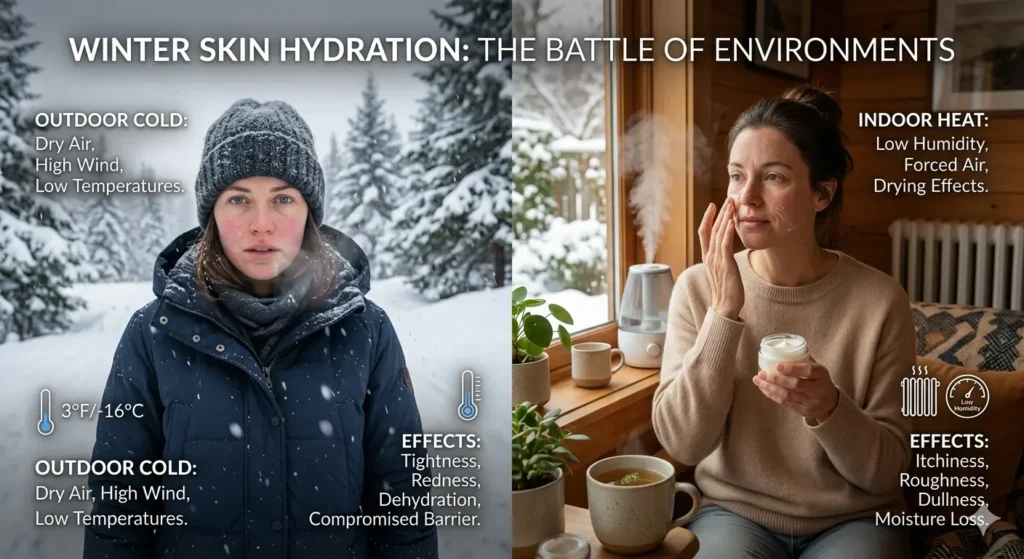
Here’s something that surprised me the first time I really dug into it: cold air itself isn’t the main villain. It’s the combination of low humidity, harsh wind, and indoor heating that creates a perfect storm for your skin barrier.
When humidity drops, the air pulls moisture out of your skin rather than the other way around. Add in central heating, which dries out indoor air even further, and your skin is essentially losing hydration from both directions, indoors and outdoors. That’s why so many women notice tightness, flaking, or sudden sensitivity that wasn’t there in October.
I’ve noticed that the people who struggle most in winter are usually the ones who don’t adjust their routine until the damage is already visible. By the time your skin is cracking or flaking, the barrier has already taken a hit. Prevention works so much better than repair here.
Dermatologists often describe this as “transepidermal water loss,” which is a fancy way of saying your skin’s outer layer can’t hold onto hydration the way it normally would. Once that barrier is compromised, things like fragrance, certain actives, or even your regular cleanser can start to sting or irritate in ways they never did before.
A Quick Real-Life Example
A friend of mine, who has always had fairly resilient, low-maintenance skin, called me in a slight panic last December. Her face was suddenly breaking out and peeling at the same time, which felt contradictory to her. Turns out, her skin barrier was so dehydrated that it overproduced oil to compensate, while the surface still flaked from dryness. This is incredibly common in winter, and it confuses people because it doesn’t look like “classic” dry skin.
Building a Winter Skincare Routine That Actually Works
This is where many shoppers get confused. They assume winter skincare just means a thicker moisturizer, full stop. In reality, it’s about layering products strategically so each one does its job without overwhelming your skin or leaving it greasy.
Step 1: A Gentle, Non-Foaming Cleanser
Foaming cleansers can feel satisfying, but in winter, they tend to strip your skin’s natural oils right when you need them most. Cream, oil, or gel-to-milk cleansers tend to work better for most skin types during colder months.
In my experience, switching to a cream cleanser around late autumn makes a noticeable difference within just a week or two. Skin feels less “squeaky clean” and more, well, comfortable.
Step 2: Hydrating Toner or Essence (Optional but Helpful)
This step isn’t mandatory, but I’ve found it genuinely useful. A hydrating toner or essence preps the skin and adds a thin layer of moisture before heavier products go on. Look for ones with glycerin, panthenol, or hyaluronic acid.
Step 3: Layer Your Serums (Thinnest to Thickest)
This is the part people skip, and it’s a shame because it’s where the real transformation happens.
- Hydration serum (hyaluronic acid, glycerin) goes first on slightly damp skin.
- Treatment serums like niacinamide or peptides go next.
- Face oil, if you use one, comes after serums but before your moisturizer.
A recurring theme I noticed while researching this topic is that estheticians consistently recommend applying hyaluronic acid to damp skin, not dry skin. Dry skin can actually pull moisture from deeper layers if there’s no water for the hyaluronic acid to bind to, which makes dryness worse, not better. That one tip alone changed how I use the product.
Step 4: A Richer Moisturizer
Winter calls for something with more emollients and occlusives than your summer go-to. Think ceramides, shea butter, squalane, or fatty acids. This is where the “heavier moisturizer” advice actually applies, but it should come after your hydrating steps, not instead of them.
Step 5: SPF, Even in Winter
I know, I know. It’s grey outside, the sun barely peeks through, and SPF feels pointless. But UV rays don’t disappear in winter, they just get less obvious. Snow and ice actually reflect UV rays, which means skiers and people in snowy climates can get more sun exposure than they realize.
Honestly, this surprised me the first time I read about it. I’d always assumed sunscreen was a summer-only ritual until a dermatologist friend pointed out that UVA rays, the ones responsible for aging, penetrate clouds and glass year-round.
The Best Ingredients to Look For This Season
Not every “hydrating” ingredient works the same way, and understanding the difference helps you shop smarter instead of just grabbing whatever says “moisturizing” on the label.
Humectants (Pull Moisture In)
- Hyaluronic Acid
- Glycerin
- Panthenol (Vitamin B5)
These ingredients attract water to the skin’s surface. They’re fantastic, but only when paired with something to seal that moisture in. Using them alone in a dry winter climate can sometimes leave skin feeling drier afterward, especially indoors with heating running constantly.
Emollients (Soften and Smooth)
- Squalane
- Fatty Acids
- Plant Oils (jojoba, marula, rosehip)
These fill in the gaps between skin cells, making the surface feel smoother and less rough. Many customers mentioned in reviews I came across that adding a few drops of facial oil over moisturizer made a noticeable difference in how long hydration lasted through the day.
Occlusives (Lock Moisture In)
- Ceramides
- Shea Butter
- Petrolatum
- Lanolin
This is the step most people underuse in winter. Occlusives create a barrier on top of the skin, preventing water loss. If your skin is still tight and flaky after moisturizing, you likely need more occlusive support, not necessarily a “stronger” product overall.
Ingredients to Use Carefully
- Retinoids can increase sensitivity to cold and wind. Many dermatologists suggest easing back frequency in deep winter or buffering with extra moisturizer.
- AHAs/BHAs are still useful but should be used less frequently if your barrier feels compromised.
- Fragrance, even “natural” fragrance, can irritate already-stressed winter skin.
One thing that stood out to me while comparing different expert recommendations is how often they all repeated the same advice: simplify your routine when your skin is struggling, rather than adding more products to fix it.
Common Winter Skincare Mistakes (And How to Fix Them)
Mistake 1: Over-Exfoliating
It’s tempting to scrub away flaky skin, but excessive exfoliation in winter often makes flaking worse by damaging an already fragile barrier.
Fix: Cut exfoliation back to once or twice a week, and choose gentler options like lactic acid over stronger acids or physical scrubs.
Mistake 2: Skipping Moisturizer on Oily Skin
Many people overlook this, but oily skin still needs hydration in winter. Skipping moisturizer because skin feels oily often triggers even more oil production as the skin tries to compensate for dryness.
Fix: Use a lightweight, oil-free moisturizer rather than skipping this step entirely.
Mistake 3: Hot Showers
This one’s a personal weakness of mine. Long, scalding showers feel amazing in winter, but they strip natural oils from the skin and worsen dryness, especially on the body.
Fix: Lukewarm water, shorter showers, and moisturizing immediately after.
Mistake 4: Ignoring SPF Because It’s Cold
As mentioned earlier, UV exposure doesn’t take a winter break.
Fix: A daily SPF 30+ moisturizer or standalone sunscreen, rain or shine.
Mistake 5: Switching Products Too Often
Based on my research, and honestly from personal experience, constantly switching products in search of a “miracle fix” often does more harm than good. Skin needs time, usually four to six weeks, to show whether a product is genuinely helping.
Fix: Stick with a routine for at least a month before judging results, barring any irritation.
Body Care Matters Too: Beyond the Face
If you’re anything like me, your body skincare routine basically disappears the moment it gets cold. Hands hidden in gloves, legs covered in tights, and suddenly body lotion feels optional. It’s not.
Hands
Hands are exposed to water, soap, and cold air constantly, which makes them prone to cracking. A rich hand cream with shea butter or ceramides, applied after every wash, makes a real difference. I keep one by the sink and one in my bag, because out of sight really does mean out of mind here.
Lips
Chapped lips are almost a winter rite of passage. Look for occlusive balms with beeswax, shea butter, or petrolatum rather than menthol or camphor-based balms, which can actually worsen dryness over time despite the cooling sensation feeling soothing in the moment.
Feet and Elbows
These areas often get neglected until cracking becomes painful. A weekly thicker balm application, especially at night under socks, prevents this from becoming a bigger issue.
Body Lotion
Switching from a light, fast-absorbing lotion to a cream-based body moisturizer in winter helps prevent that itchy, tight feeling after showering.
Lifestyle Habits That Support Healthy Winter Skin
Skincare products only do so much. A few lifestyle adjustments genuinely move the needle.
- Humidifiers: Running one overnight, especially in bedrooms with heating, helps counteract dry indoor air.
- Hydration: Drinking enough water supports skin function, though it’s not a substitute for topical hydration.
- Diet: Omega-3 rich foods like salmon, walnuts, and flaxseed support the skin’s lipid barrier.
- Layering Clothing: Wool and certain synthetic fabrics can irritate already-dry skin; cotton layers underneath help reduce friction and irritation.
In my experience, the humidifier is the one change people underestimate the most. It sounds almost too simple, but waking up without that tight, dehydrated feeling on your face makes a noticeable difference.
Choosing Products: What to Splurge On vs. What to Skip
After reviewing multiple sources, customer reviews, and dermatologist recommendations, a pattern becomes clear: certain products genuinely benefit from a higher price point, while others perform just as well at budget-friendly prices.
Worth Considering a Higher Investment
- Moisturizers with clinically-backed ceramide complexes, since formulation quality varies significantly here.
- Retinoid treatments, where stability and delivery systems affect both results and irritation levels.
- Sunscreens you’ll actually enjoy wearing daily, since consistency matters more than the price tag.
Where Budget Options Often Perform Well
- Cleansers, since their main job is simply to cleanse gently without stripping skin.
- Basic hydrating serums with straightforward hyaluronic acid or glycerin formulas.
- Lip balms, where the ingredient list matters more than the brand name.
A recurring theme in customer reviews across multiple retailers is that satisfaction often comes down to texture and how a product feels during use, not necessarily price. Many women mentioned switching to a more affordable moisturizer and noticing no difference in results compared to a luxury version with similar ingredients.
FAQ Section
- Do I really need to change my skincare routine for winter?
Yes, in most climates. Lower humidity and indoor heating change how your skin behaves, and routines that worked well in summer often feel insufficient by midwinter.
- Is it necessary to use a heavier moisturizer in winter even with oily skin?
Not necessarily heavier, but definitely more hydrating. Oil-free, ceramide-rich formulas can provide hydration without feeling greasy.
- Can I still use retinol in winter?
Yes, though many dermatologists suggest reducing frequency slightly and ensuring your barrier is well-moisturized, since retinoids can increase sensitivity to cold and wind.
- Why does my skin feel oily and dry at the same time in winter?
This usually happens when the skin barrier is dehydrated and overproduces oil to compensate. It’s more common than people realize and usually improves with proper hydration layering.
- Should I stop exfoliating completely in winter?
Not entirely, but reducing frequency and choosing gentler exfoliants helps prevent further barrier damage.
- Is sunscreen really necessary on cloudy winter days?
Yes. UVA rays penetrate clouds and glass, and snow can reflect UV rays, increasing exposure in certain climates.
- How long does it take to see results from a new winter skincare routine?
Most dermatologists suggest giving a new routine four to six weeks before evaluating its effectiveness, barring irritation.
- What’s the biggest mistake women make with winter skincare?
Based on my research, it’s usually over-exfoliating or skipping moisturizer due to oily skin, both of which tend to worsen the very issues they’re trying to fix.
Final Thoughts
Winter skincare isn’t about overhauling everything you own or chasing the latest viral product. It’s about understanding what your skin genuinely needs when the air gets drier and colder, and adjusting accordingly. The biggest shifts, layering hydration properly, easing up on harsh exfoliation, and not skipping SPF, make a bigger difference than any single “miracle” product ever could.
If there’s one thing I’d want you to take away from this winter skincare guide for women, it’s this: your skin isn’t being dramatic or difficult. It’s responding to a real environmental shift, and a little patience and the right layering approach go a long way. Pay attention to how your skin feels week to week, adjust gently rather than drastically, and give new products enough time to actually show what they can do.
Here’s to making it through the cold months with skin that feels comfortable, not just “managed.”
You Might Also Like:
– CBD Skincare Does It Actually Work? 2026 Review
– True Skin Mineral Loose Powder Review Worth It?
– One Step Skin Perfector Review Worth Buying? (2026)
-
Sale!

Dinner Plates – Japanese Minimalism
Original price was: $28.00.$18.00Current price is: $18.00. -
Sale!
Round Table Anti Slip Mats – Modern Home
Original price was: $14.70.$9.90Current price is: $9.90. -
-
Indigo Blue Ceramic Vase
$101.00