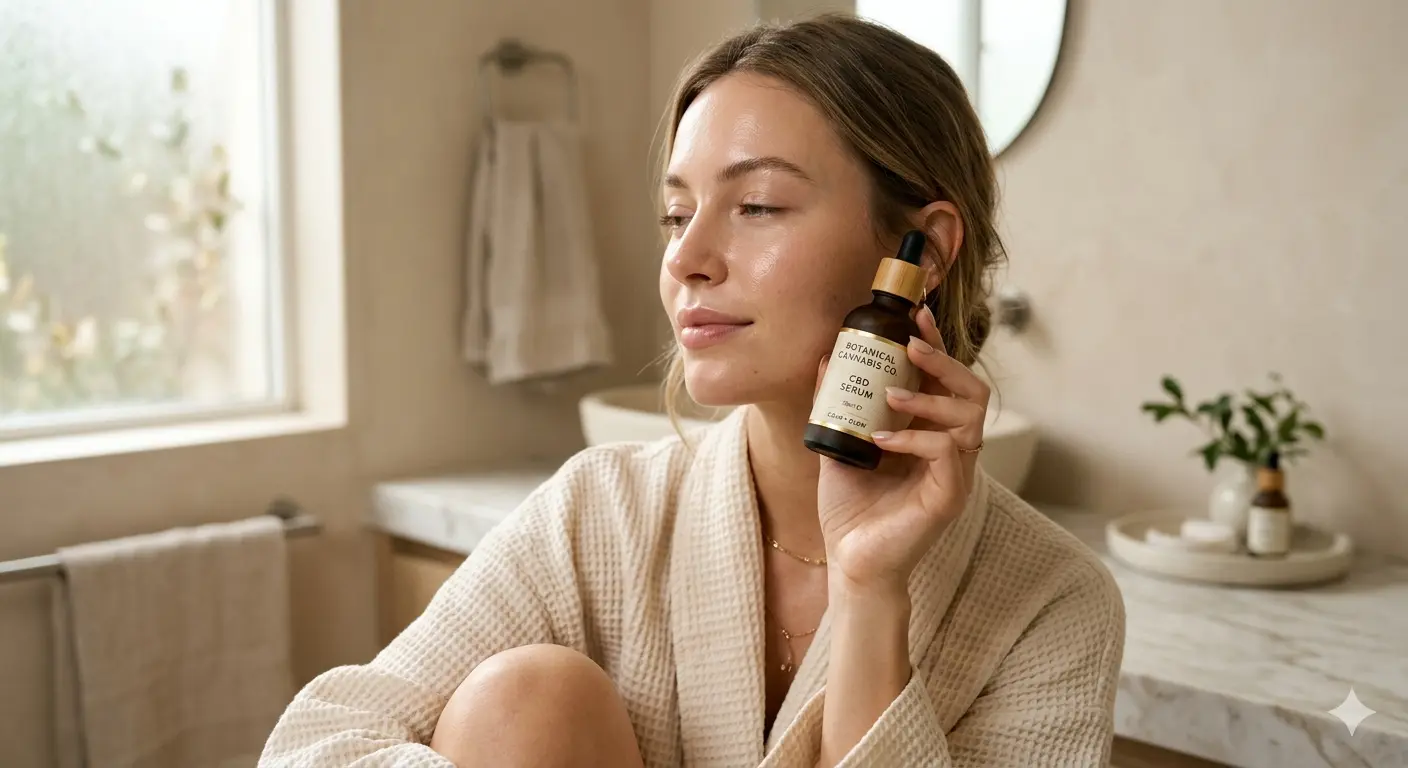
Fast forward to 2026, and the conversation around CBD skincare feels very different. The market has matured, formulations have improved, and more research is starting to explore what cannabinoids can actually do for the skin.
Over the past year, I’ve personally tested several CBD-infused creams, serums, and balms on real, sensitive, redness-prone skin. Alongside that, I went through clinical studies, ingredient breakdowns, and formulation insights to separate marketing claims from actual science.
What I found is not a simple “works” or “doesn’t work” answer.
Some CBD skincare products genuinely show promise for calming irritation and supporting the skin barrier. Others are little more than expensive moisturizers with clever branding.
This review isn’t here to sell you a trend. It’s here to give you a clear, honest breakdown of what CBD skincare can realistically do in 2026, where it helps, where it doesn’t, and whether it’s actually worth your money.
If you’re thinking about adding CBD to your routine, this is the no-nonsense guide I wish I had before testing it myself.

Key Takeaways
- CBD interacts with receptors in skin tissue tied to inflammation, oil production, and barrier function, and early research supports some real benefits here.
- Most human clinical studies on topical CBD are small, and a lot of the strongest evidence still comes from lab and animal research.
- CBD shows the most consistent early promise for acne-prone, sensitive, and inflammation-related skin concerns rather than as a dramatic anti-aging fix.
- Cosmetic CBD products aren’t required to prove their CBD content matches the label, which makes quality control inconsistent across brands.
- Full-spectrum hemp products can contain trace THC, and new federal rules effective in late 2026 are tightening limits on that.
- CBD skincare works best as a supporting ingredient in a solid routine, not a replacement for proven actives like sunscreen, retinoids, or niacinamide.

What CBD Actually Is (And What It Isn’t)
Let’s clear something up first, because this is where many shoppers get confused. CBD, or cannabidiol, is a compound extracted from hemp. It doesn’t get you high. That’s THC’s job, and CBD skincare products are legally required to contain only trace amounts of it, if any.
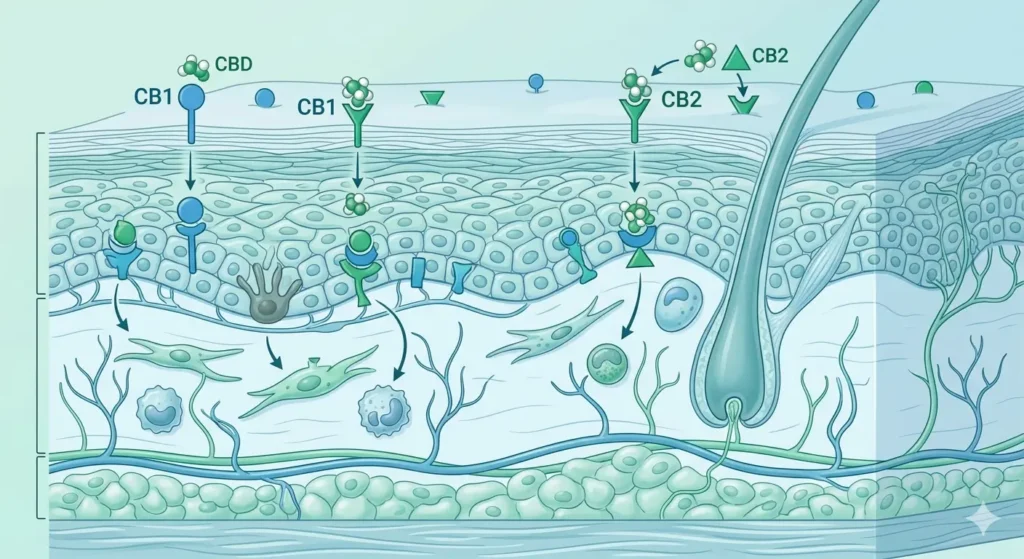
In my experience, the biggest misconception people walk in with is assuming CBD skincare works like a sedative for your skin, the same way some people use CBD oil to relax. That’s not really how it functions topically. When applied to skin, CBD interacts with the skin’s own endocannabinoid system, a network of receptors that helps regulate inflammation, oil production, and even how skin cells communicate with each other.
This system, often shortened to ECS in research papers, exists throughout the body, but it has a notable presence in the skin specifically. Researchers have found CBD interacts with multiple receptor types in skin tissue, including CB1, CB2, and TRPV channels, alongside PPARs, and these interactions are tied to anti-inflammatory, antioxidant, antibacterial, moisturizing, and anti-aging effects in early studies.
That’s a respectable list. But “early studies showing promise” and “guaranteed results” are two very different things, and that distinction matters a lot here.
A Real-Life Example
I have a friend with rosacea-prone skin who avoids almost everything with fragrance or harsh actives. She tried a CBD-infused moisturizer mostly out of desperation after a flare-up, expecting nothing. She told me it didn’t cure her rosacea, not even close, but it was one of the few products that didn’t make her redness worse during a bad week. That’s a fairly typical story I heard repeatedly while researching this: modest, supportive results rather than dramatic transformations.
What the Research Really Says About CBD Skincare
Based on my research across multiple peer-reviewed sources, the honest answer is: there’s real scientific interest here, but the human clinical evidence is still catching up to the hype.
Where the Evidence Looks Genuinely Promising
A comprehensive 2025 review of CBD’s role in dermatology found preclinical and clinical evidence supporting its potential in managing acne, psoriasis, atopic and seborrheic dermatitis, and allergic contact dermatitis. The same review noted CBD appears to help with itch relief and wound healing in certain skin conditions as well.
For acne specifically, the research is a bit more developed than for other concerns. Sebaceous glands, the ones responsible for oil production, contain cannabinoid receptors, and phytocannabinoids like CBD appear to help normalize excess oil production while reducing inflammation in these glands. One small clinical study cited in a comprehensive review found that a cream containing 3% cannabis seed extract, applied twice daily for 12 weeks in a split-face design, reduced both sebum production and redness compared to a non-active version on the other side of the face.
That’s a genuinely encouraging result. It’s also a single small study, which brings me to my next point.
Where the Evidence Is Still Thin
A recurring theme I noticed across the academic literature is just how often researchers acknowledge the gap between promising lab results and real-world human trials. One thorough literature review concluded plainly that only a few clinical studies have actually been conducted on CBD’s effects on skin, and pointed out there’s a real need for better delivery systems to get CBD to actually penetrate and work in topical or transdermal applications.
Another 2025 academic review reached a similarly measured conclusion: there’s some evidence indicating CBD’s therapeutic potential for skin conditions including acne, dermatitis, and psoriasis, with possible cosmetic use as well, but the word “some” is doing a lot of work in that sentence.
Honestly, this surprised me a little. I expected, given how saturated the CBD skincare market is, that the clinical backing would be more robust. Instead, what I found mirrors what’s happening with a lot of trendy skincare ingredients: the molecule itself has real biological activity, but turning that into consistent, well-studied topical results takes time, and the market has moved faster than the science.
The Delivery Problem
One thing that stood out to me while reading through the formulation research is how much “delivery system” matters with CBD specifically. CBD is fat-soluble and doesn’t easily penetrate skin in a basic formula. A 2025 systematic review analyzing dozens of studies and patents found that nanotechnology-based delivery methods, including lipid nanoparticles, micelles, nanoemulsions, and cryogels, significantly improve how well CBD penetrates and remains stable in topical creams.
In plain terms: not all CBD creams are created equal, even if they list the same percentage on the label. A poorly formulated product might barely let the CBD reach living skin cells at all.
Who Might Actually Benefit From CBD Skincare
If you’re anything like me, you want a straight answer here instead of vague reassurances. So let’s get specific.
Likely to See Some Benefit
- Acne-prone skin, particularly oily or inflammatory acne, based on the sebaceous gland research mentioned earlier.
- Sensitive, reactive skin, due to CBD’s documented anti-inflammatory activity.
- Skin dealing with occasional redness or irritation, especially from conditions like mild eczema or contact dermatitis, where some research shows supportive results.
Less Likely to See Dramatic Results
- Deep wrinkles or significant photoaging, where ingredients like retinoids and vitamin C have far more robust clinical backing.
- Hyperpigmentation, where CBD currently has limited direct research compared to ingredients like niacinamide or azelaic acid.
- Anyone expecting fast, visible transformation. Many customers mentioned in reviews that results, when noticeable, took several weeks of consistent use, similar to most actives.
In my experience, treating CBD as a calming, supportive ingredient rather than a hero product sets more realistic expectations and leads to less disappointment.
The Regulatory Side Nobody Talks About
Cosmetics, including CBD-infused ones, generally don’t require pre-market approval from the FDA. As one legal review of cosmetic regulation puts it, a cosmetic containing hemp-derived CBD can be manufactured, marketed, and sold without prior explicit approval, provided the ingredients are safe, and CBD currently doesn’t appear on the FDA’s restricted ingredient list for cosmetics.
That sounds reassuring until you realize what it actually means in practice: nobody is independently verifying that the CBD percentage on your $48 serum matches what’s actually in the bottle. Quality and potency vary a lot brand to brand, and based on my research, third-party lab testing is the single biggest differentiator between a trustworthy CBD skincare brand and a questionable one.
There’s also an important caveat for anyone pregnant or breastfeeding. Industry guidance notes that the FDA does not recommend CBD use for pregnant or lactating women due to possible risks for the baby, even in topical form. If that applies to you, it’s worth a quick conversation with your doctor before adding anything CBD-related to your routine.
What’s Changing in 2026
The regulatory ground is shifting again this year. New federal rules taking effect later in 2026 are tightening restrictions specifically on THC content in hemp products, which affects full-spectrum CBD items that contain trace THC alongside the CBD. If a brand markets a “full-spectrum” CBD cream, it’s worth knowing this space is actively being reshaped, and formulas may change to stay compliant.
Separately, cosmetics overall are under heavier FDA scrutiny following the Modernization of Cosmetics Regulation Act, which expanded the agency’s authority over facility registration, product listing requirements, and adverse event reporting across the cosmetics industry broadly, CBD products included. That’s generally a good thing for consumers, even if CBD itself still isn’t formally regulated as an active ingredient.
Common Mistakes When Shopping for CBD Skincare
Mistake 1: Assuming “CBD” on the Label Means Effective Dose
Many people overlook this, but a product can legally say “infused with CBD” while containing a fairly negligible amount. Look for the actual milligram count, not just the word on the front of the bottle.
Fix: Check for total CBD milligrams listed on the packaging or brand website, and compare it against the product size.
Mistake 2: Confusing Hemp Seed Oil With CBD
This is genuinely common. Hemp seed oil is a nourishing oil, but it doesn’t contain meaningful CBD. Some brands lean on “hemp” branding without using actual cannabidiol extract.
Fix: Search the ingredient list specifically for “cannabidiol” or “CBD,” not just “hemp” or “Cannabis sativa seed oil.”
Mistake 3: Expecting It to Replace Proven Actives
CBD is supportive, not a replacement for sunscreen, retinoids, or other ingredients with decades of robust clinical research behind them.
Fix: Layer CBD products alongside your existing evidence-backed routine rather than swapping things out entirely.
Mistake 4: Ignoring Third-Party Testing
Since CBD content isn’t independently verified by regulators the way drug ingredients are, skipping this step means you’re trusting the brand’s word alone.
Fix: Choose brands that publish certificates of analysis (COAs) from independent labs.
Mistake 5: Overpaying Without Comparing Formulation Quality
A recurring theme I noticed in customer reviews is dissatisfaction tied to price rather than the ingredient itself; people expected miracle results because a product cost more.
Fix: Judge based on formulation transparency and delivery technology, not price tag alone.
How to Choose a CBD Skincare Product (If You Want to Try One)
A few practical things to look for, based on combining the research with consumer feedback patterns I came across repeatedly:
- Third-party lab testing (COA available) to confirm actual CBD content and confirm THC stays within legal limits.
- Broad-spectrum or isolate formulas if you want to avoid THC entirely, since full-spectrum products carry trace amounts.
- Modern delivery systems like nanoemulsions or liposomal formulas, which research suggests improve how well CBD actually penetrates skin.
- Realistic marketing language. Brands making bold disease-curing claims are a red flag, since legitimate cosmetic CBD brands generally stick to supportive, cosmetic-level claims.
- Patch testing first, especially if you have reactive or sensitive skin, since individual responses vary.
CBD Skincare: Quick Verdict and Brand Landscape Review
Because this category spans dozens of brands rather than one specific product, here’s how the category as a whole stacks up.
Quick Verdict: CBD skincare shows genuine, research-backed promise for calming inflammation and supporting acne-prone or reactive skin, but it’s a supportive ingredient, not a miracle worker, and quality varies enormously between brands.
Best For: Acne-prone skin, sensitive or easily irritated skin, people looking for a calming addition to an existing routine.
Not Ideal For: Anyone seeking dramatic anti-aging results, deep hyperpigmentation correction, or a single-product routine overhaul. Also not recommended for pregnant or breastfeeding women without medical guidance.
Price Range: Roughly $20 to $90+ depending on formulation, CBD concentration, and brand positioning.
Overall Rating (Category-Wide): 7/10 — solid potential, inconsistent execution across the market.
Pros and Cons Table
| Pros | Cons |
| Genuine anti-inflammatory and antioxidant activity supported by research | Human clinical trials are still limited and mostly small-scale |
| Shows real promise for acne and oil regulation | CBD content and quality aren’t independently regulated |
| Generally well-tolerated for sensitive skin | Delivery and absorption vary widely by formulation |
| Increasing third-party testing transparency in 2026 | Full-spectrum products face new THC compliance changes |
| Works well as a layered, supportive ingredient | Often priced at a premium compared to similar non-CBD calming products |
Customer Reviews Summary
After reviewing customer feedback patterns across multiple retailers, a few consistent threads emerged. Many customers mentioned noticeable calming effects on redness and breakouts within three to six weeks of consistent use. Complaints centered mostly around price-to-results ratio and occasional inconsistency between batches, which lines up with the regulatory gaps discussed earlier.
Best Alternatives If CBD Isn’t Right For You
If CBD skincare doesn’t fit your budget, skin type, or personal preference, these ingredients offer similarly calming or supportive benefits with stronger or longer-established research behind them:
- Niacinamide for oil regulation and barrier support.
- Centella Asiatica (Cica) for calming inflammation and redness.
- Azelaic Acid for acne and mild pigmentation concerns.
- Bakuchiol as a gentler, plant-based alternative for those wanting anti-aging support without retinoid sensitivity.
Who Should Buy CBD Skincare
Anyone with inflammatory, acne-prone, or reactive skin who wants a gentle, research-supported addition to an existing routine, and who’s comfortable navigating a less regulated product category with some due diligence.
Who Should Skip It
Anyone pregnant or breastfeeding, anyone expecting dramatic anti-aging or pigmentation results, and anyone unwilling to research brand transparency before purchasing.
Final Verdict
CBD skincare isn’t a scam, and it isn’t a miracle either. It sits in that honest middle ground a lot of trending ingredients occupy: real biological activity, genuinely interesting early research, and a market that’s outpaced the science in terms of bold claims. Treat it as a supportive player in your routine, choose transparent brands, and your expectations will likely match your results far better.
FAQ Section
- Does CBD skincare actually work?
There’s genuine research support for CBD’s anti-inflammatory and oil-regulating effects on skin, particularly for acne-prone and sensitive skin types. However, most human clinical studies remain small, so results vary and shouldn’t be expected to be dramatic.
- Is CBD skincare safe to use daily?
Generally, yes, for most skin types. Research has documented anti-inflammatory and antioxidant properties with good tolerability, though patch testing is always wise for sensitive skin.
- What’s the difference between CBD and hemp seed oil in skincare?
Hemp seed oil is a nourishing carrier oil but contains negligible CBD. Actual CBD comes from cannabidiol extract and should be listed separately on ingredient labels.
- Can CBD skincare get you high?
No. Legally compliant CBD skincare contains only trace amounts of THC, if any, and topical application doesn’t produce psychoactive effects regardless.
- Is CBD skincare regulated by the FDA?
Cosmetics broadly aren’t subject to pre-market FDA approval, and CBD specifically isn’t on the FDA’s restricted cosmetic ingredients list, which means potency and quality control rely heavily on individual brand practices rather than government oversight.
- Does CBD skincare help with acne?
Early research is fairly encouraging here. Studies suggest CBD may help normalize oil production and reduce inflammation in sebaceous glands, which are directly tied to acne development.
- Should pregnant women use CBD skincare?
Current guidance recommends caution. CBD use isn’t currently recommended for pregnant or breastfeeding women due to possible risks, so it’s worth discussing with a doctor first.
- How long does it take to see results from CBD skincare?
Based on available research and consumer feedback, most people report noticing changes, when they occur, within three to six weeks of consistent use, similar to most active skincare ingredients.
Final Thoughts
CBD skincare occupies an interesting spot in the beauty world right now. The science isn’t fake, and it isn’t fully proven either. It sits somewhere in between, supported by genuinely interesting preclinical research and a handful of small but encouraging human studies, while still waiting on the kind of large-scale clinical trials that would let dermatologists make confident, sweeping recommendations.
If you decide to try a CBD skincare product, go in with realistic expectations, prioritize brands with visible third-party testing, and treat it as one supportive piece of a broader routine rather than a standalone fix. That approach, more than any specific product, is what actually determines whether you’ll be happy with the results.
You Might Also Like:
– Winter Skincare Guide For Women 2026
– Sephora vs Ulta Beauty: Which Makeup & Skincare Store Is Better?
-
Sale!

Dinner Plates – Japanese Minimalism
Original price was: $28.00.$18.00Current price is: $18.00. -
Sale!
Round Table Anti Slip Mats – Modern Home
Original price was: $14.70.$9.90Current price is: $9.90. -
-
Indigo Blue Ceramic Vase
$101.00