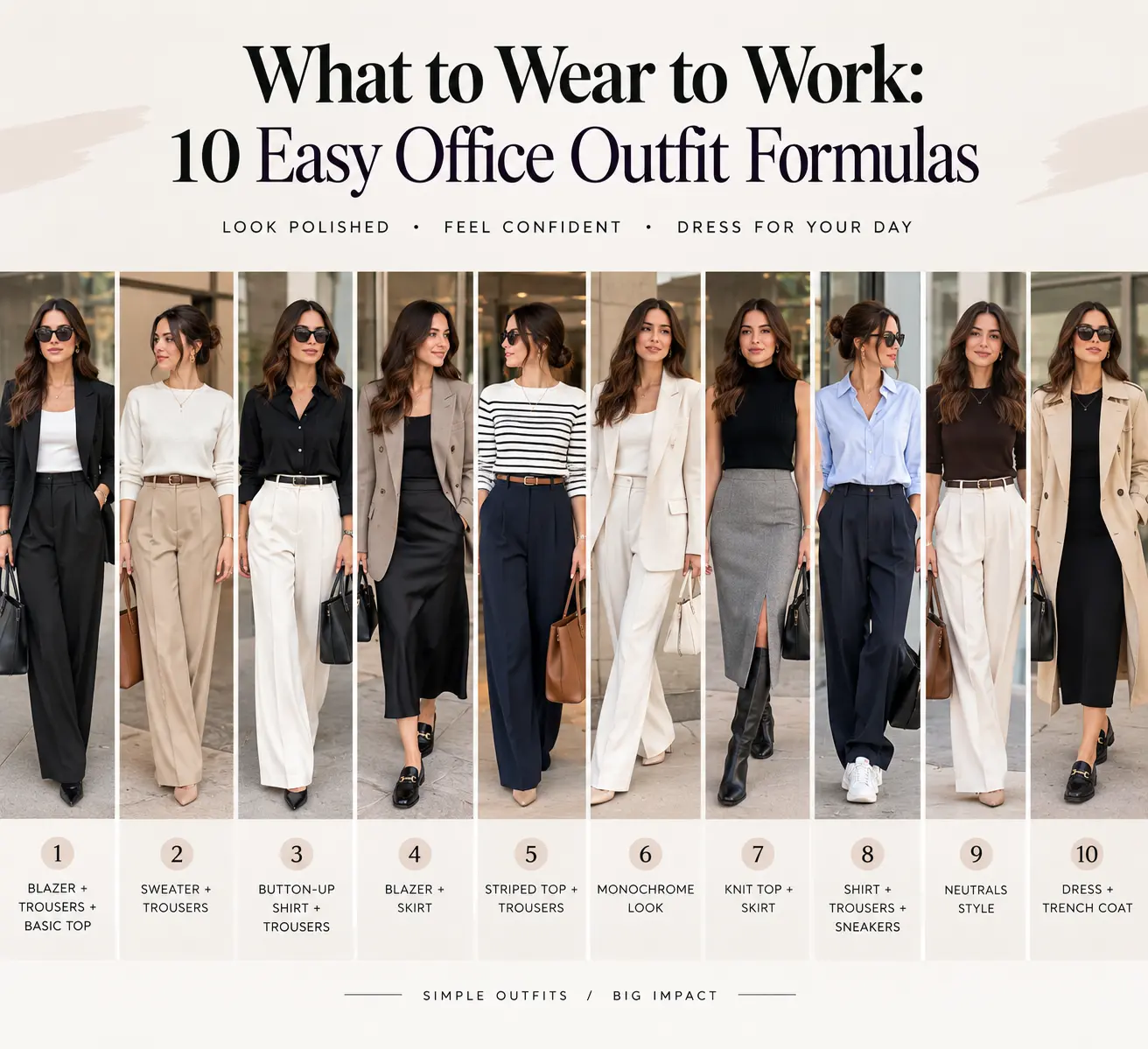
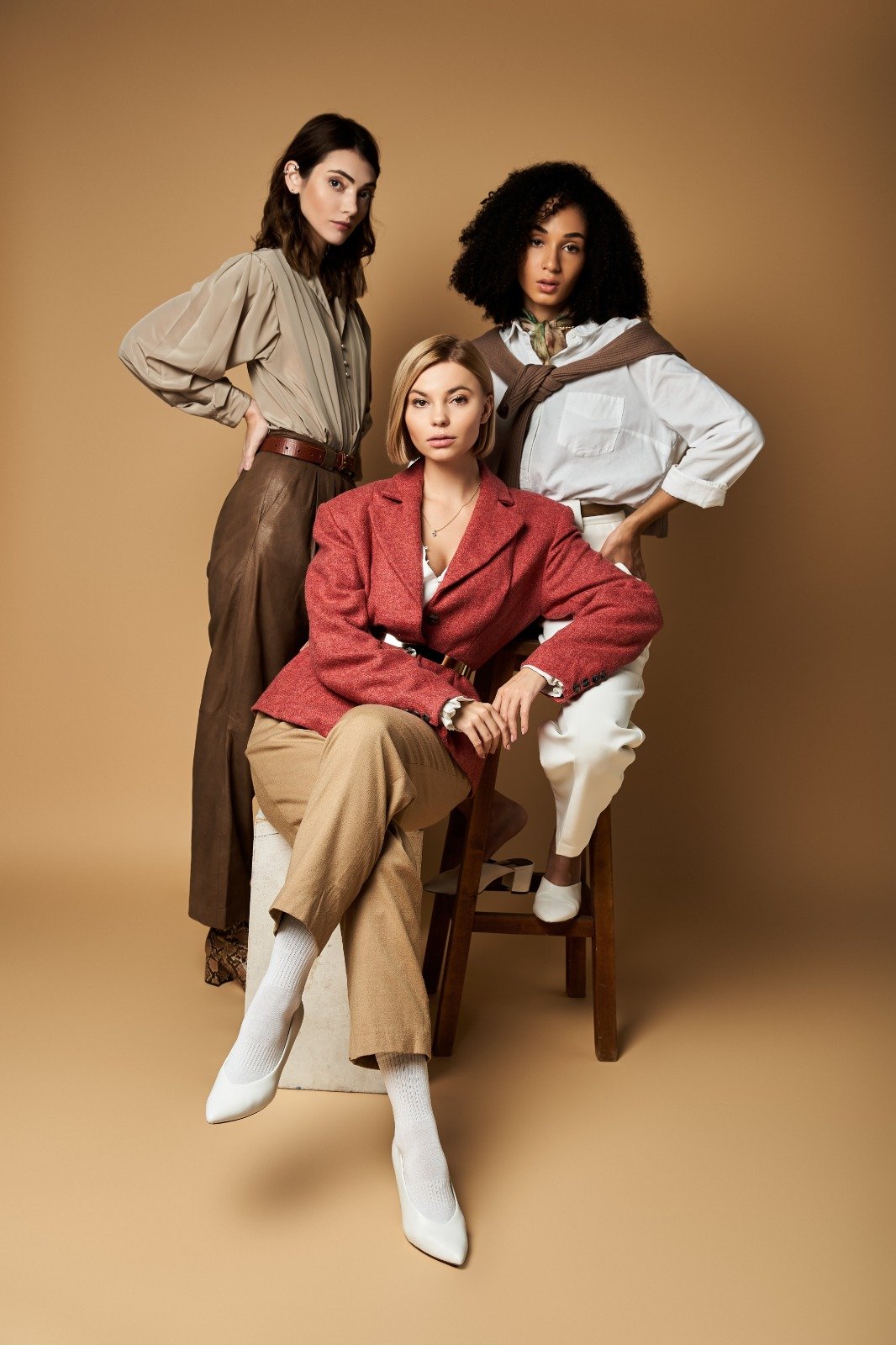
What to wear to work, depends on your dress code, your role, the weather and what your day looks like. A reliable starting point is tailored trousers or a midi skirt with a polished shirt, knit, blazer or dress. Choose comfortable shoes, breathable fabrics and pieces you don’t have to keep adjusting.
At Guide of Fashion, we think good workwear should do more than look professional in the mirror. You should be able to sit through a meeting, walk to lunch, commute home and carry your laptop while still feeling comfortable.
That means looking past trends. Fit, fabric, construction, proportion and what your workplace actually expects all matter.
Key Takeaways
- Start with your company’s real dress code.
- Build outfits around reliable basics: trousers, shirts, knitwear, skirts, dresses and blazers.
- Cotton poplin gives crisp structure, fine knits soften tailoring, and wool blends add structure and warmth.
- Comfortable shoes are part of a professional outfit, not an afterthought.
- A small wardrobe of pieces that go together can make many outfits.
Table of Contents
- How to Decide What to Wear to Work
- Easy Work Outfit Ideas
- Business Casual Outfit Ideas
- What to Wear in Hot Weather
- What to Wear in Cold Weather
- Building a Small Workwear Capsule
- Quick Style Guide
- Common Workwear Mistakes
- FAQs
How to Decide What to Wear to Work
The first rule: dress for your workplace, not someone else’s Pinterest board. A law firm, creative agency, school, hospital, retail store and startup all have different expectations.
Ask yourself three questions:
- How formal is my workplace?
- How much will I move around today?
- What will the weather demand?
For a traditional office, tailored trousers, blazers, polished shirts, dresses and closed-toe shoes usually work. For business casual, mix tailoring with relaxed pieces. Creative workplaces often allow more color, denim and interesting silhouettes.
Guide of Fashion tip: Starting a new job and unsure about the dress code? It’s easier to begin slightly more polished and watch what your colleagues wear.
Easy Work Outfit Ideas
Five formulas worth repeating.
1. Tailored Trousers + Button-Down Shirt
This is the workwear version of a dependable white sneaker. Pair tailored trousers with a cotton poplin shirt, and wear it tucked, half-tucked or under a blazer. COS and J.Crew both offer a good range of tailored trousers in different cuts.
Fit tip: Check the waistband, seat, rise and hem. Trousers shouldn’t pull across the hips or bunch at the ankle.
Style it: Loafers for a traditional office, clean sneakers where appropriate.
2. Knit + Tailored Trousers
A fine-gauge sweater softens tailoring. Try a fitted or semi-fitted knit with high-rise trousers. Tuck it in for a defined waist, or leave a longer, relaxed sweater loose for a casual line.
Fabric tip: Fine merino is useful for in-between temperatures. Patagonia describes merino as breathable, moisture-wicking and odor-resistant. Still, look at the actual weight of the garment, not just the word “merino” on the label.
3. Midi Dress + Blazer
A midi dress is one of the easiest work outfits because there’s nothing to coordinate. Choose a simple shape and add a blazer when you need more structure. For conservative offices, pick a higher neckline and a hem that still covers you comfortably when you sit.
Guide of Fashion tip: Always do the sitting test before you buy. A dress that looks fine standing can ride up a lot when you sit.
4. Straight-Leg Trousers + Blouse + Loafers
A strong business-casual formula. Wear a light blouse, straight-leg trousers and loafers. A structured handbag adds polish without adding another layer of clothing.
5. Pencil or A-Line Midi Skirt + Knit
A midi skirt with a fine knit is a good alternative to trousers. A pencil skirt looks more tailored, and an A-line moves more easily. Choose whichever feels better when you sit and walk.
Business Casual Outfit Ideas
Business casual confuses people because it means something different at every company. A simple rule: combine one structured piece with one relaxed piece.
6. Blazer + T-Shirt + Tailored Trousers
A clean tee works in a relaxed office when it’s paired with tailored trousers and a blazer. Avoid big graphics, heavy distressing and thin fabric that turns see-through under office lights. The blazer adds structure, and the tee keeps things approachable.
7. Dark Jeans + Blazer + Loafers
If denim is allowed, dark, clean jeans work with a structured blazer and polished shoes. Choose straight-leg or slim-straight jeans, not heavily distressed ones. Levi’s and Madewell are good starting points for dark, well-fitting denim.
Guide of Fashion tip: Dark jeans aren’t automatically professional. Condition, fit, hem and styling all matter.
8. Wide-Leg Trousers + Fitted Top
Wide-leg trousers give you comfort without looking casual. Balance the volume with a fitted or semi-fitted top. A cropped blazer can work too if it suits your proportions.
Petite? Avoid trousers that swallow your shoes unless the long line is deliberate. Taller? Full-length wide legs create a strong vertical line.
What to Wear to Work in Hot Weather
In summer, it can feel tropical outside and arctic inside your office.
9. Linen-Blend Trousers + Lightweight Shirt
Linen and linen blends are smart warm-weather choices. UNIQLO offers linen shirts, trousers and dresses that are light and breathable. For work, pick a more structured linen shirt rather than a beachy one, and pair it with tailored linen-blend trousers and loafers.
Trade-off: Linen wrinkles. If you want a smoother look, go for a blend. For more hot-weather ideas, see our guide to what to wear in humid weather.
10. Midi Dress + Light Cardigan
A breathable midi is the easiest summer work outfit. Keep a light cardigan or blazer handy for strong air conditioning. Choose a dress that isn’t sheer and lets you move comfortably.
Fabric tip: Check thin fabrics in natural light if you can. They can look very different under office lighting.
What to Wear to Work in Cold Weather
Cold-weather office outfits work best when the layers are thin enough to keep your shape.
Think of layering in three parts: a base, a middle layer and an outer layer. Patagonia’s layering guide describes it the same way, with baselayers, midlayers and shells. For the office, that translates to:
Fine base + knit + tailored coat
rather than three bulky pieces. A fine merino layer under a sweater adds warmth without adding volume. Nordstrom is a handy one-stop shop for coats, knitwear and boots.
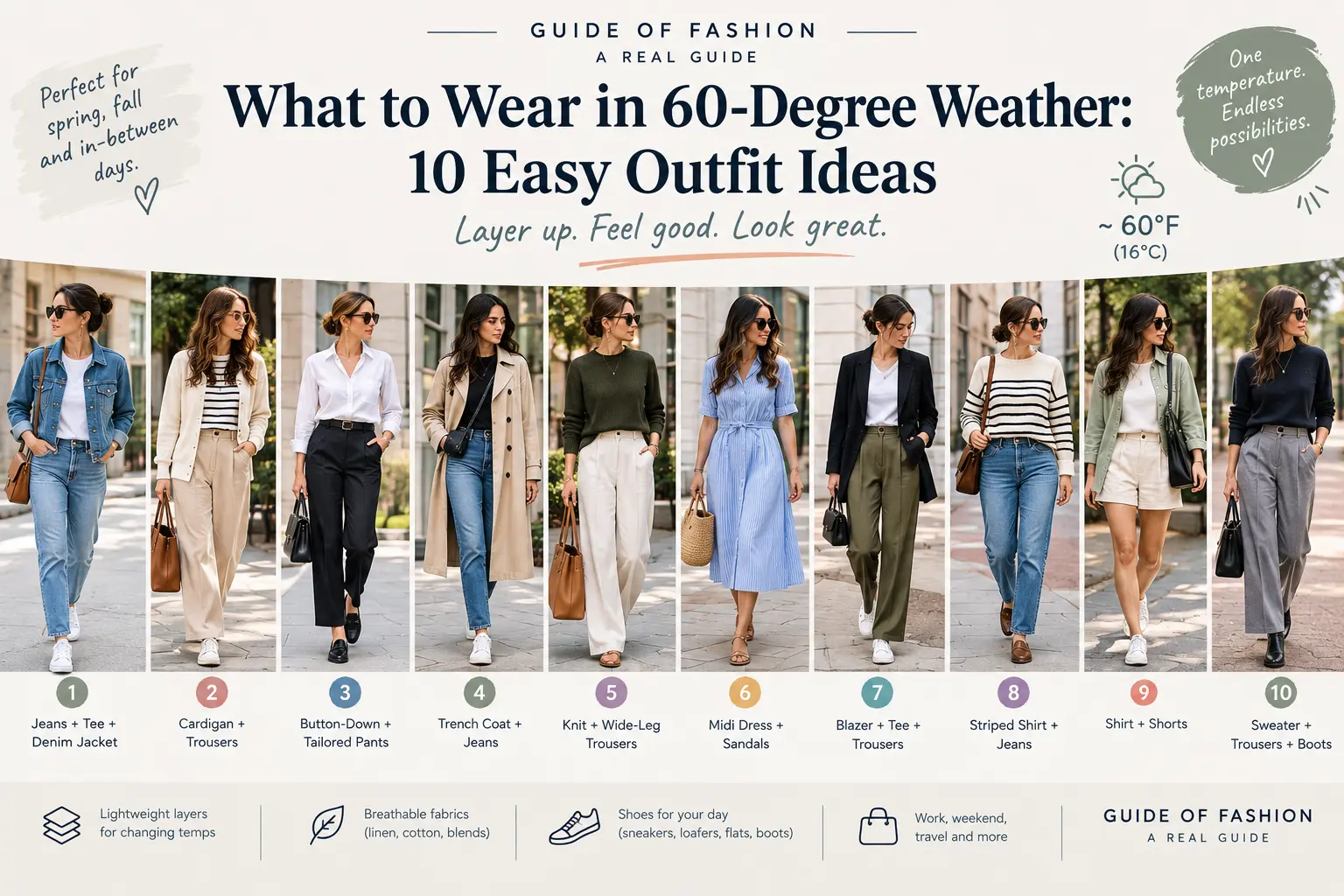
Dressing for an in-between day, around 60°F? Read our guide on what to wear in 60-degree weather.
Building a Small Workwear Capsule
You don’t need 30 office outfits. Start with:
- 2 tailored trousers
- 1 wide-leg trouser
- 1 pair of dark jeans, if allowed
- 2 button-down shirts
- 2 fine knits
- 1 blazer
- 1 cardigan
- 1 midi dress
- 1 skirt
- 2 pairs of professional shoes
- 1 practical work bag
From these you can build plenty of combinations. Trousers + shirt becomes trousers + shirt + blazer. Swap the shirt for a knit. Or layer a cardigan over the shirt. The wardrobe doesn’t need to be big. It needs to coordinate.
Quick Style Guide
| Occasion |
What to Wear |
Fabric |
Footwear |
Budget Option |
| Formal office |
Trousers + shirt + blazer |
Wool/poplin |
Loafers |
Straight trousers + shirt |
| Business casual |
Blazer + tee + trousers |
Cotton/wool blend |
Loafers |
Blazer you own + tee |
| Casual office |
Dark jeans + knit |
Denim/cotton |
Sneakers |
Jeans + cardigan |
| Hot weather |
Linen trousers + shirt |
Linen blend |
Loafers |
Cotton trousers + blouse |
| Cold weather |
Knit + trousers + coat |
Merino/wool |
Boots |
Layered sweater + trousers |
| Presentation |
Tailored suit + shirt |
Wool blend |
Pumps/loafers |
Matching trousers + blazer |
| Creative office |
Wide trousers + fitted top |
Cotton/blend |
Sneakers |
Relaxed trousers + tee |
Quality Checklist for Workwear
Before you buy, check:
- Fabric: Does it suit your climate?
- Fit: Can you sit, walk, bend and reach without constantly adjusting?
- Construction: Look at seams, buttons, zippers, hems, lining and pockets.
- Care: Will you really maintain it? Dry-clean-only isn’t practical for everyone.
- Versatility: Can you wear it with at least three things you already own?
Guide of Fashion tip: Expensive-looking workwear isn’t always expensive. A clean fit, the right fabric weight, pressed clothes and well-kept shoes make a bigger difference than a price tag.
Common Workwear Mistakes
Wearing something too tight. Professional clothes shouldn’t need constant adjusting.
Wearing every trend at once. One interesting silhouette is usually enough.
Forgetting the back of the outfit. If you sit in meetings all day, your outfit needs to work from behind too.
Wearing uncomfortable shoes. They affect how you move and how long you can stay in them.
Forgetting your commute. An outfit can be office-perfect and still wrong for a long walk, a train ride or a hot commute.
Buying pieces that only match one outfit. Before you buy, picture at least three combinations.
FAQs
What should I wear to work as a woman?
Start with your dress code. Tailored trousers, button-down shirts, fine knits, midi skirts, dresses, blazers and polished shoes are versatile foundations. Adjust the tailoring, color and footwear depending on whether your workplace is formal, business casual or relaxed.
What is a good business casual outfit?
Try tailored trousers with a fine knit and loafers, dark jeans with a blazer if denim is allowed, or a midi dress with a cardigan. Business casual works best when structured pieces are balanced with comfortable, less formal ones.
Can I wear jeans to work?
It depends on your workplace. If denim is allowed, dark, clean, well-fitting jeans are easier to style professionally than distressed or very casual pairs. Wear them with a blazer, structured shirt, knit or polished shoes.
What should I wear to work in summer?
Choose light, breathable pieces like linen-blend trousers, cotton shirts, light dresses and fine knits. Keep a cardigan or blazer nearby for air-conditioned offices.
How many work outfits do I actually need?
Fewer than you think. Two or three trousers, several tops, a blazer, cardigan, dress, skirt and two pairs of shoes can make many combinations when the colors and silhouettes go together.
Final Thoughts
Knowing what to wear to work gets much easier when you stop treating every weekday as a new styling problem. Build around reliable pieces. Understand your dress code. Pay attention to fabric and fit. Then change the combination instead of buying another outfit every time your calendar changes.
That’s the idea behind Guide of Fashion: workwear should look polished, but it also has to work when you’re actually living in it.