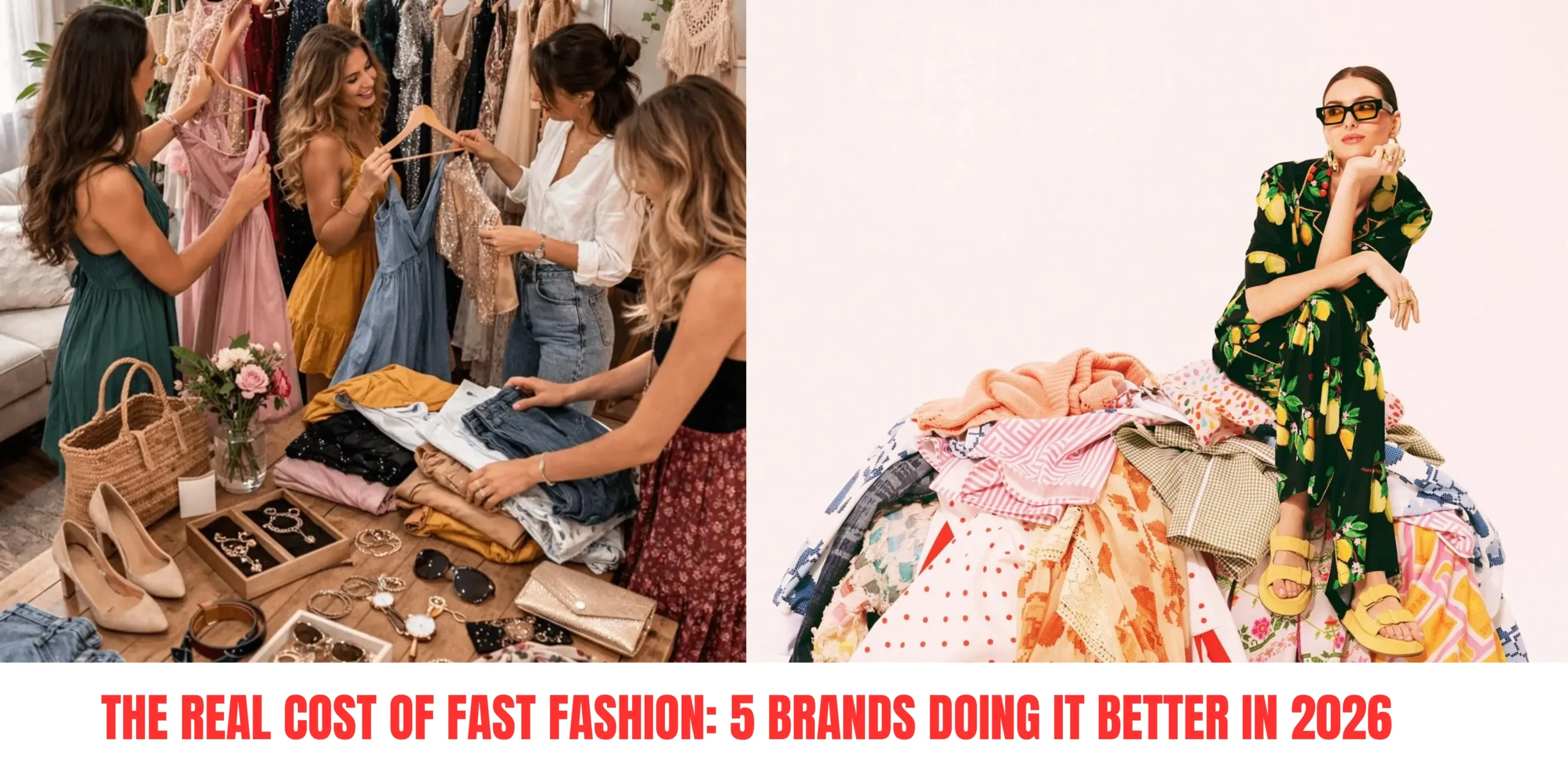
Featured Snippet: The real cost of fast fashion goes far beyond the price tag on the rack. It shows up as environmental pollution, mountains of textile waste, high carbon emissions, and unfair conditions for the people who make our clothes. Choosing affordable, sustainable brands is one of the simplest ways to cut down on waste while still building a wardrobe you’ll actually want to wear.
Table of Contents
- What Is Fast Fashion?
- The Real Cost of Fast Fashion
- Environmental Impact of Fast Fashion
- Fast Fashion vs. Sustainable Fashion
- 5 Brands Doing It Better
- How to Shop More Sustainably
- Final Thoughts
- FAQs
What Is Fast Fashion?
Standing in a store holding a $12 dress, it’s easy to miss what that price actually represents. Low prices make fashion feel disposable and endlessly accessible — but somewhere down the line, someone or something is covering the difference.
Fast fashion is clothing made quickly and cheaply to keep up with whatever trend is hot right now. Instead of a couple of seasonal collections a year, some brands push out hundreds — sometimes thousands — of new styles every single week.
That kind of speed doesn’t come free.
Millions of garments get made, worn a handful of times, and then tossed. Meanwhile, factories are under constant pressure to produce for less, which raises real questions about how workers are treated and what corners get cut along the way.
More shoppers are starting to ask a simple question: is it really worth buying more if the clothes don’t even last a season? For a growing number of people, the answer is no.
The Real Cost of Fast Fashion Goes Beyond the Price Tag
A cheap top might save you money at checkout, but the real cost shows up elsewhere.
| Hidden Cost |
Impact |
| Textile Waste |
Millions of tons of clothing pile up in landfills every year |
| Water Pollution |
Dyeing and finishing fabrics contaminates rivers and waterways |
| Carbon Emissions |
Fashion is one of the largest industrial polluters on the planet |
| Resource Consumption |
Cotton and synthetic fibers demand huge amounts of water and energy |
| Worker Conditions |
The pressure to keep prices low often trickles down to unsafe or underpaid labor |
These are usually the first things people run into when they start asking why fast fashion has such a bad reputation. The problem isn’t that inexpensive clothing exists — it’s a system that’s built around buying constantly instead of buying well.
Most of us have at least one item in our closet we’ve worn exactly once. That’s worth sitting with for a second.
Environmental Impact of Fast Fashion
One of the more frustrating parts of fast fashion is how fast it turns into waste. A shirt that felt exciting in March can be forgotten by June — and that’s happening across billions of garments a year.
Some of the biggest environmental concerns include:
- Massive amounts of textile waste ending up in landfills
- High greenhouse gas emissions during manufacturing
- Cotton farming that consumes huge volumes of water
- Microplastic pollution shed from synthetic fabrics
- Chemical dyes leaching into rivers and ecosystems
Synthetic fabrics like polyester are a quieter problem too — every wash releases tiny plastic fibers that eventually make their way into rivers and oceans. Buying fewer, better-made pieces is one of the more effective ways to shrink your own footprint here.
Fast Fashion vs. Sustainable Fashion
There’s a common assumption that sustainable clothing simply costs more. That’s true sometimes, but it’s not the whole picture.
| Fast Fashion |
Sustainable Fashion |
| Trend-driven |
Quality-driven |
| Cheaper upfront |
Better value over time |
| Short lifespan |
Built to last |
| High-volume production |
Smaller, more deliberate production |
| Often synthetic blends |
More organic, recycled, or responsibly sourced materials |
| Encourages frequent buying |
Encourages buying with intention |
This isn’t really about doing everything perfectly. It’s about making better calls where you can. A well-made jacket that lasts five years often ends up cheaper than replacing three flimsy versions of the same thing.
Not every company follows the fast-fashion playbook. These five focus on quality and transparency while still keeping most of their pieces within reach — and if you want a longer list to browse, check out our full roundup of affordable sustainable fashion brands.
1. Patagonia
Patagonia has earned its reputation as one of the most trusted names in sustainable outdoor wear. Rather than pushing constant new purchases, the brand runs its Worn Wear program to help people repair what they already own. A lot of its gear is made from recycled materials, and the company has been investing in environmental causes for decades.
Best for: Outdoor clothing, jackets, fleece, hiking gear, long-lasting basics
Why it stands out: Solid construction, a genuine repair-first mindset, recycled fabrics, and a track record on environmental commitments that goes back further than most.
Patagonia isn’t cheap, but plenty of customers get years out of a single jacket — which changes the math on what “expensive” really means. The same logic applies to footwear — a good pair of comfortable walking shoes that actually lasts is a better investment than replacing cheap sneakers every few months.
Patagonia
2. Pact
If you want affordable, ethical basics, Pact is worth a look. The brand focuses on everyday essentials made mostly from organic cotton — t-shirts, hoodies, underwear, dresses, loungewear.
Why people like it: Organic cotton, prices that don’t feel like a splurge, comfortable staples, and reasonably transparent sourcing.
For anyone easing into a more sustainable wardrobe without overhauling everything at once, Pact is an easy entry point.
Pact
3. Tentree
Tentree ties every purchase to reforestation — the brand plants ten trees for each item sold. Beyond that, its clothing uses organic cotton, recycled polyester, and TENCEL™ fibers, with designs that lean casual and stay in style longer than most trend pieces.
Popular picks: Hoodies, sweatshirts, joggers, jackets, everyday basics
Why it made the list: The tree-planting model, comfortable minimalist designs, eco-conscious materials, and genuinely detailed sustainability reporting.
If you’d rather buy pieces you’ll wear for years than chase whatever’s trending, this is a solid fit — especially if you’re building a wardrobe around an everyday active lifestyle rather than one-off gym trips.
Tentree
4. People Tree
People Tree has been in the ethical fashion space for decades, long before it became a buzzword. Instead of chasing micro-trends, it sticks to clothing designed to hold up beyond a single season — organic cotton, natural fibers, and collaborations with artisan communities.
Best for: Everyday dresses, organic cotton basics, knitwear, ethical wardrobe essentials, women’s fashion
Why it stands out: Decades of ethical-fashion credibility, certified organic materials, genuine support for artisan craftsmanship, and a focus on timeless over trendy.
A People Tree dress might cost more upfront than a fast-fashion equivalent, but a lot of shoppers end up wearing it for years instead of a few washes.
People Tree
5. Kotn
Kotn does one thing really well: premium everyday basics without the noise of constant new drops. The brand works directly with cotton farming communities and is fairly open about its supply chain, with clean, minimalist pieces that mix easily into almost any wardrobe.
Best for: Premium t-shirts, shirts, sweatshirts, everyday essentials, capsule wardrobes
Why it made the list: High-quality Egyptian cotton, transparent sourcing, minimalist style, and pieces built to last.
Kotn is proof that sustainable fashion doesn’t need flashy branding — sometimes a well-made white t-shirt is exactly what your closet is missing.
Kotn
Quick Comparison
–$
| Brand |
Best For |
Price Range |
Sustainability Highlight |
| Patagonia |
Outdoor apparel |
$$$ |
Recycled materials, repair program |
| Pact |
Everyday basics |
$$ |
Organic cotton, affordable essentials |
| Tentree |
Casual wear |
$$ |
Plants 10 trees per purchase |
| People Tree |
Women’s fashion |
Ethical production, organic materials |
| Kotn |
Minimalist basics |
$$ |
Direct sourcing, premium natural cotton |
How to Shop More Sustainably Without Spending a Fortune
You don’t need to replace your whole wardrobe overnight — honestly, that would defeat the purpose. A few small habits go a lot further:
Buy less, wear more. Before you check out, ask yourself if you’ll still want this a year from now. If yes, it’s probably a smart buy.
Choose quality over quantity. A well-made pair of jeans that lasts five years usually beats three cheap pairs that fall apart. Look for reinforced stitching, durable fabric, and cuts that won’t feel dated in a year. Investing in solid wardrobe essentials — the kind of pieces you reach for every season — pays off far more than chasing trends.
Build a capsule wardrobe. A smaller collection of pieces that actually work together cuts down on impulse buys and makes getting dressed a lot less stressful. Our capsule wardrobe guide walks through exactly how to start one, even if you’re doing it on a budget.
Take care of what you own. Wash in cold water when you can, air dry when possible, fix loose buttons and small tears before they become bigger problems, and store things properly. It adds up.
Shop secondhand. Thrift stores, vintage shops, resale apps, and clothing swaps keep garments in circulation longer — and you’ll often find something no one else has.
Final Thoughts
Once you understand the real cost of fast fashion, it’s hard to shop the same way again. Cheap clothing stops looking like such a bargain once you factor in the environmental damage, the waste, and the pressure it puts on supply chains around the world. No brand gets everything right, but choosing companies that care about quality, transparency, and responsible production is a real step in the right direction.
You don’t have to become a perfect sustainable shopper overnight. Buying fewer things, choosing better quality, and actually wearing what’s already in your closet can matter more than any single “eco-friendly” purchase. Fashion should reflect who you are — not pile up as waste.
Frequently Asked Questions
Is fast fashion always bad?
Not every affordable brand operates the same way, but a lot of fast-fashion business models are built around speed and low costs — which often comes at an environmental or human cost. Shopping more thoughtfully and buying less can genuinely help.
What’s the biggest environmental impact of fast fashion?
Textile waste, carbon emissions, heavy water use, dye pollution, and microplastics shed from synthetic fabrics are the big ones.
Are sustainable brands always more expensive?
Sometimes, but not always. A lot of affordable ethical brands now compete on price for basics — and better quality often means a lower cost per wear in the long run.
Which sustainable brand is best for beginners?
Pact and Tentree are both easy starting points — everyday essentials, reasonable prices, and responsible production without a steep learning curve.
How can I reduce my fashion footprint?
Buy fewer, better-made pieces, take care of what you already own, shop secondhand when you can, and support brands that are upfront about how and where their clothes are made.